Arizona drivers, dealers, and curious neighbors often want to know what sits behind a license plate number, and the answers depend on which records are public and which are protected by law. A plate lookup in Arizona can confirm whether a tag belongs to a registered vehicle, reveal basic vehicle details tied to that tag, and point you toward the right agency for official records. This page covers the practical steps, the information you can reasonably expect to see, and the limits that state and federal rules place on personal data. It covers plate types, fees, and replacements.
The guidance works for any Arizona tag you encounter. Before typing a plate number into a search box, it helps to understand what the Arizona Motor Vehicle Division (MVD) actually maintains and who is allowed to see it. Registration records, title histories, and plate assignments are handled by Arizona Motor Vehicle Division (MVD), though driver and owner details fall under tighter privacy protections. The sections below cover the lookup process, the results a search can produce, plate formats and fees, and how to order or replace tags. Each section begins with a short summary and then details the points that matter most. Use the resource links near the end to reach Arizona Motor Vehicle Division (MVD) directly for anything official or time sensitive.
Relevant Pages
- Arizona License Plate Lookup
- Arizona DMV License Plate Lookup
- Arizona License Plate Owner Lookup
- Free Arizona License Plate Lookup
- Arizona Reverse License Plate Lookup
- Arizona Custom and Vanity Plates
- Arizona License Plate Types
- Replace a Lost or Damaged Arizona Plate
- Arizona License Plate Fees
- Check Arizona Tickets and Tolls by Plate
- Arizona VIN Lookup by Plate
How to Look Up a Arizona License Plate
Looking up a Arizona plate is mostly a matter of matching the tool to the question. Some searches confirm a vehicle’s basic details, others check registration or title status, and official record requests go through Arizona Motor Vehicle Division (MVD). The steps below keep you on legitimate, current sources instead of paid sites that recycle stale or borrowed data and charge for information you could obtain yourself.
Start With the Complete Plate Number
Accuracy begins with capturing every character on the tag. Arizona plates mix letters, numbers, and sometimes symbols, and a single swapped character can send a search toward the wrong vehicle or toward no record at all. Write the plate down exactly as it appears, and note the state name or abbreviation printed across it, since neighboring states issue tags that look similar at a glance. A quick photograph helps when lighting, dirt, or an odd angle makes a character ambiguous. Confirm whether the vehicle carries one plate or two, and check that the color and design match Arizona current styling rather than an outdated sample.
Use the Official Arizona Motor Vehicle Division (MVD)
The most reliable source for Arizona plate and registration facts is Arizona Motor Vehicle Division (MVD), the agency that issues tags and keeps the master record. Many states let you confirm registration, renew online, check a plate’s status, or request a vehicle record through an official portal. Starting there means the data comes from the same system that police, insurers, and title clerks rely on, not a third party that copied it years ago. Expect to verify your identity, provide a plate or vehicle identification number, and possibly pay a modest fee that Arizona Motor Vehicle Division (MVD) sets. If a question involves title, liens, or ownership, ask Arizona Motor Vehicle Division (MVD) which form applies rather than assuming a generic search will answer it.
Use a Vehicle History or VIN Search
A license plate lookup often works best as a doorway to the vehicle identification number, the seventeen character code stamped on the car and printed on the title. Once you have the VIN, commercial history services can report accidents, salvage branding, odometer readings, and recalls drawn from insurers, auctions, and repair shops. These reports describe the vehicle, not its current owner, so they help buyers checking a used car and anyone verifying that a plate matches the described automobile. Some states let you pull a title or lien record by VIN through Arizona Motor Vehicle Division (MVD).
- Accident and salvage entries
- Odometer readings across owners
- Open safety recalls by VIN
- Title branding such as flood or rebuilt
Review the Search Results
Once a lookup returns information, read it carefully and separate confirmed facts from assumptions. A result that shows a make, model, year, and registration status describes the vehicle tied to that plate at a point in time, which may or may not be the current status. Check the date on the report, since an old record can describe a plate that has since been reassigned or a vehicle that changed hands. Confirm that the state on the result matches Arizona, since a similar plate from another state would be a different car. If something looks inconsistent, such as a body style that does not match the make, treat the data as unverified.
What a Arizona Plate Lookup Can Show
A Arizona plate search can reveal a surprising amount about a vehicle without touching anyone’s private life, and it can stop short in ways that surprise people. The difference comes down to which records are public, which are protected, and which are simply not collected. Knowing the boundaries ahead of time keeps expectations realistic and helps you ask for the right document.
Vehicle Information
The most frequent output of a plate lookup is basic vehicle data. Given a valid Arizona tag, a history or VIN service can usually report the make, model, model year, body style, engine or fuel type, and sometimes the plant where it was built. This information originates from the manufacturer and from title and registration transactions, so it tends to be consistent across reputable sources. Buyers use it to confirm that the car in front of them matches its listing, and sellers use it to prepare accurate details. None of this touches personal identity, which is why it is widely available.
Registration and Title Status
Beyond the vehicle itself, a lookup may indicate whether the tag is currently registered and whether a title or lien is on file. Arizona Motor Vehicle Division (MVD) holds this information since it issues plates, collects registration, and records ownership transfers. A registration check can confirm that a plate is active, expired, or suspended, which matters when you are buying a used car or verifying a vehicle left on your property. Title status can show salvage, rebuilt, flood, or lemon branding in some states, along with an open lien held by a lender. The deepest title records are often restricted to the owner, a lienholder, or someone with a lawful reason.
Recall, Odometer and Accident Records
Safety and history data round out what many lookups provide. Manufacturers issue recalls by VIN, and a plate tied to a VIN can lead you to open safety campaigns that a dealer will fix at no charge. Odometer readings gathered from inspections, service visits, and title transfers help reveal rollback or tampering when the numbers no longer line up. Accident and salvage entries come from insurers, police reports, and auctions, and they can flag a car declared a total loss and later rebuilt. These records are assembled by private data brokers and by government agencies, so completeness varies.
What a Result Cannot Show
Just as important is what a plate search will not reveal. It will not hand you a current owner’s name, home address, phone number, or driving record, since federal and state privacy law protect those details. It will not tell you who was behind the wheel at a given moment, since a car can be driven by anyone the owner allows. It will not provide live location data, since no public system tracks a plate in real time, whatever some advertisements imply. It cannot confirm insurance coverage in every state or guarantee that a history report is complete.
Can You Find a Vehicle Owner by License Plate?
One of the most frequent questions about plate lookups is whether you can identify the person who owns the car. The short answer is that owner identity is tightly protected, and the route to it runs through specific legal channels rather than a public search box. Knowing how those rules work in practice can save you time, money, and legal risk.
Owner Name and Address Searches
In most states, the registered owner’s name and address attached to a plate are not public information. Arizona Motor Vehicle Division (MVD) maintains those records but releases them only for approved reasons and often only to the person named or to an authorized requester. A handful of states allow limited lookups for certain parties, and some older records may linger in county files, but a blanket public owner search does not exist. That is why websites promising an owner’s name from a plate number usually return a vehicle description instead, or ask for a fee and then deliver a generic report.
The Driver’s Privacy Protection Act
The federal Driver’s Privacy Protection Act shapes how every state handles personal information from motor vehicle records. Passed to protect drivers after high profile abuses, it restricts disclosure of names, addresses, photographs, and similar details except when the request fits a listed purpose such as legal proceedings, insurance claims, safety recalls, or government functions. States implement the law with their own forms and verification steps, and Arizona Motor Vehicle Division (MVD) decides whether a particular request qualifies. Violations can carry civil and criminal penalties, which is why agencies are cautious and why legitimate requests require documentation. The law applies to data gathered by the state, not to information a person chooses to share.
DMV Records and Legitimate Requests
If you have a lawful need for owner information, Arizona Motor Vehicle Division (MVD) is where the process starts. Typical qualifying situations include legal proceedings, a verified insurance matter, a recall notice, or a government purpose, and each requires evidence such as a court document, a police report number, or a contract. You will usually complete a record request form, show identification, and state the permitted reason, and the agency may notify the person on file depending on state rules. Fees for such requests are set by Arizona Motor Vehicle Division (MVD) and vary, so check the current schedule rather than relying on secondhand figures.
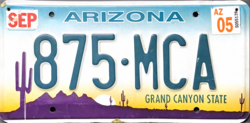
Arizona License Plate Types and Formats
Arizona issues more than one kind of plate, and the type affects how a lookup behaves and what a tag costs. Format conventions, design, and mounting rules differ by category, so recognizing the plate in front of you is a helpful first move. The notes below apply across most states, though Arizona Motor Vehicle Division (MVD) is always the final word for your particular vehicle.
Standard, Commercial and Motorcycle Plates
Standard passenger plates cover most private cars, minivans, and light trucks, and they usually carry a simple letter and number pattern that makes them easy to read and record. Commercial plates identify vehicles used for business, such as delivery vans and heavier trucks, and may be tied to weight ratings or operating authority. Motorcycle plates are smaller, often square or compact, and carry fewer characters, which can make a photograph harder to interpret. Some states issue plates for trailers, farm vehicles, buses, and apportioned interstate trucks. Since format rules differ, a tag that looks unusual may simply belong to another category rather than being fake.
Personalized and Specialty Plates
Personalized plates let owners choose a combination, subject to availability and content rules that screen out offensive or confusing phrases. Specialty plates raise money for causes, universities, sports teams, or conservation programs, and they usually carry an extra charge on top of standard fees. Both types still identify a vehicle in the same registration system, so a lookup works the same way, though the added characters can lengthen the plate and complicate transcription. Renewal terms and surcharges differ by program, and some designs are limited to certain vehicles or organizations. Since personalized and specialty tags are memorable, they are easier for scammers to spot and imitate online.
Front and Rear Plate Rules
States disagree about how many plates a vehicle must display. Roughly half require both a front and a rear plate on passenger cars, though others issue a single rear plate. Enforcement and inspection rules follow the same pattern, so a missing front tag may be lawful in one state and a violation in another. This matters for lookups since a photo taken from the front gives you the same number as the rear in two plate states, but the design and any stickers may differ. Some places use registration decals that show the month and year, and these can help you confirm an expiration date.
Arizona License Plate Fees
Plate costs in Arizona come from several separate charges rather than a single price, and the total depends on the vehicle, the plate type, and how late you are. Since rates change and vary widely by state, treat the figures you see online as outdated and confirm with Arizona Motor Vehicle Division (MVD). The sections that follow describe each part in turn so you know what to ask about.
Plate and Document Fees
When you receive new plates, Arizona Motor Vehicle Division (MVD) typically charges for the physical tags themselves and for the paperwork that issues them. A standard replacement pair may carry one price, though specialty, personalized, or commemorative designs add a surcharge, sometimes recurring at each renewal. There can be a title or registration document fee connected to the transaction. Since Arizona sets these amounts and adjusts them over time, the only dependable figure is the one Arizona Motor Vehicle Division (MVD) lists today. Check the official fee schedule before you budget, and confirm whether the charge covers one plate or a matched set, since that difference surprises many owners.
Registration Fee Components
Registration is where most of the cost lives, and it is built from several parts. A base registration charge applies to the vehicle, and additional amounts may reflect weight, vehicle value or age, county or city taxes, and assorted state programs. Some states tie a portion of the fee to the vehicle’s assessed value, which means two owners of the same model can pay different totals. Electric and hybrid vehicles may carry a separate road use charge in certain states. Plate and registration fees fund road maintenance, enforcement, and agency operations, which is why they are set by lawmakers and revised through legislation.
Late Penalties
Missing a registration or renewal deadline usually costs more than the original fee. Arizona may add a late charge, and if you keep driving on an expired plate you risk a citation, a towing fee, or a court appearance, all of which can dwarf the registration itself. Some states reinstate a plate only after the past due amount and any penalties are paid, and a lapse can affect eligibility for certain privileges. Insurance companies may view a registration gap unfavorably, and an unpaid balance can complicate a later title transfer.
Ordering and Replacing Arizona Plates
Sooner or later most owners need a new set of tags, whether since a plate was lost, a design wore out, or a personalized request finally cleared. Arizona handles these transactions through Arizona Motor Vehicle Division (MVD), and the moves and costs depend on the reason. The notes below cover the most frequent situations and the fastest way to resolve each one. Each situation follows a slightly different path with the agency.
Lost, Stolen or Damaged Plates
If a Arizona plate is lost, stolen, or damaged, report it and request a replacement through Arizona Motor Vehicle Division (MVD). Stolen plates should be reported to police, since the number can be used in crimes and you want a record that you are not responsible. Damaged tags that are bent, faded, or peeling often must be turned in when new ones are issued, and an illegible plate can draw a citation on its own. Replacement usually requires proof of ownership, identification, and a fee, and the agency may assign the same number or a new one depending on state practice.
Personalized and Special Interest Orders
Personalized plates are ordered from Arizona Motor Vehicle Division (MVD) and often checked for availability and appropriateness before production. You submit your preferred combination, the agency confirms it is allowed and unused, and the plates are made and mailed, which can take several weeks. Special interest plates tied to a cause, college, or organization follow a similar path and typically add a surcharge that may recur with each renewal. Some states let you order online, though others require a form or an in person visit. Preview the design and spelling carefully, since once a plate is pressed, corrections mean another order and another fee. If your first choice is taken, have alternates ready.
Tickets and Tolls by Plate
Automated systems read plates for tolls, parking, and some traffic cameras, so a tag number can accumulate charges without the driver realizing it. Toll agencies and municipalities match the plate to registration data to send a notice, and unpaid balances can lead to late fees, registration holds, or booting in some jurisdictions. If you receive a notice that is not yours, or that names a vehicle you do not own, dispute it right away with the issuing agency and provide evidence, since a plate can be misread or cloned.
Frequently Asked Questions
These are the questions readers ask most often about Arizona plate lookups, owner data, and official records. The answers are general and apply across states, and the resource links near the end of the page point to Arizona Motor Vehicle Division (MVD) for anything specific to your situation.
Is it legal to look up a Arizona license plate?
Looking up a plate to find basic vehicle information, such as make and model, is usually legal, since those facts are not personal. Using a plate to obtain someone’s private identity or address without a permitted purpose is restricted. Arizona Motor Vehicle Division (MVD) releases personal data only for approved reasons under state and federal law.
Can I find the owner of a car by its plate number?
Not through a public search. Owner names and addresses are protected, and websites claiming instant results usually return vehicle details instead. A lawful request through Arizona Motor Vehicle Division (MVD) or law enforcement is the proper route when a permitted purpose applies.
What information can a plate lookup reveal?
Typical results include make, model, year, body style, and sometimes registration or title status and history such as recalls or salvage events. Personal details stay private. Report dates matter, since an older record may no longer reflect the current vehicle.
Does a Arizona plate lookup cost money?
Some vehicle history searches charge a fee, though many Arizona Motor Vehicle Division (MVD) services are free or low cost and others carry a set charge. Amounts vary by state and change over time. Check the current Arizona Motor Vehicle Division (MVD) fee schedule rather than trusting an old figure.
Where do I get official Arizona plate and registration help?
Start with Arizona Motor Vehicle Division (MVD), the agency that issues plates and keeps registration records. The resource list at the end of this page links to its home, plate, and fee pages. You can visit a local office or call for questions about your own vehicle.
Arizona DMV Official Resources
For the most accurate and current information about plates, registration, and fees in Arizona, use the official Arizona Motor Vehicle Division (MVD) pages below. These links connect you to the agency that issues plates and maintains vehicle records.
- Arizona Motor Vehicle Division (MVD) Home:
- https://azdot.gov/mvd
- Arizona Motor Vehicle Division (MVD) License Plates and Registration:
- https://azdot.gov/mvd
- Arizona Motor Vehicle Division (MVD) Fees:
- https://azdot.gov/mvd