California issues a wide range of license plates, and the type of plate on a vehicle reflects how that vehicle is registered and where it may legally operate. Passenger cars, commercial trucks, trailers, motorcycles, and specialty vehicles each carry distinct plate designs and numbering series. Knowing these categories helps owners read their own plates correctly and helps anyone researching a plate know what each format can represent. The California Department of Motor Vehicles (DMV) is the official source for every plate type it issues, and its records connect each plate to a registered vehicle and registered owner.
Plate types matter since they shape how a license plate lookup interprets a number. A plate with commercial formatting may belong to a truck or a trailer, though a short motorcycle plate follows a different pattern entirely. Specialty and personalized plates add further variety, since they can carry custom characters within DMV rules. This page walks through the main California plate categories, the formats they use, how a plate ties to the vehicle record, and how to recognize which type you are looking at. It is written as general information, with the California DMV as the official reference for applications and eligibility.
Relevant Pages
- California License Plate Lookup
- California DMV License Plate Lookup
- California License Plate Owner Lookup
- Free California License Plate Lookup
- California Reverse License Plate Lookup
- California Custom and Vanity Plates
- California License Plate Types
- Replace a Lost or Damaged California Plate
- California License Plate Fees
- Check California Tickets and Tolls by Plate
- California VIN Lookup by Plate
California Plate Types
California groups its plates into families based on the vehicle and its use. The main families are standard passenger plates, commercial and trailer plates, motorcycle and smaller-format plates, and personalized or specialty plates. Each family has its own character pattern, colors, and rules about where plates must appear on a vehicle. Recognizing the family is the first move toward reading a plate correctly and knowing what a lookup can return from a California number.
Standard Passenger Plates
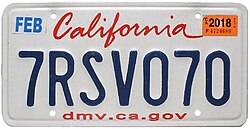
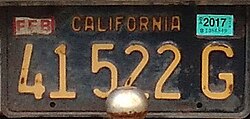
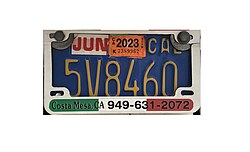
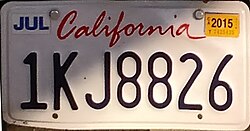
For most cars, passenger vans, and pickups below the commercial weight threshold, California issues a standard passenger plate. These plates use a white background with blue characters and are usually issued in a seven-character series that mixes digits and letters. Standard plates appear both in the plain sequential series and in several graphic designs the DMV has released over the years, including the classic blue-and-yellow and sunset plates that remain valid on vehicles still carrying them. A standard passenger plate normally stays with the vehicle through a change of ownership except when the owner keeps personalized characters or requests a new set.
- White background with blue characters
- Seven-character mixed series
- Two plates required on most cars
- Issued to passenger cars and light pickups
Commercial, Truck and Trailer Plates
Commercial vehicles, trucks, and trailers receive plate types that reflect their weight and use. California issues distinct series for commercial vehicles and for trailers, and these plates often carry an identifying prefix or a different character layout than passenger plates. Trailers, which are not self-propelled, are registered separately and carry their own plate, and many trailer plates follow a numbering pattern that sets them apart from cars. Trucks used for business may be registered by weight, and the plate and registration reflect that classification. Commercial plate series help enforcement and records staff identify a vehicle class quickly, and they affect how fees are calculated when registration is renewed.
Motorcycle and Smaller Formats
Motorcycles and certain small vehicles use plates sized and formatted for their dimensions. A motorcycle plate in California is smaller than a standard plate and typically carries a shorter character series, often five characters. This shorter format is one reason a motorcycle plate looks different from a car plate at a glance, and it changes how the characters are spaced. Mopeds and some other small formats follow their own rules as well. Since the physical plate is smaller, mounting hardware and placement differ from a car or a truck.
Personalized and Specialty Plates
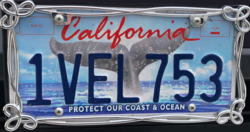
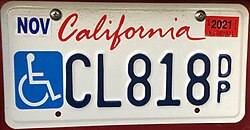
Personalized plates let a California owner choose their own characters, subject to DMV review, though specialty plates support a cause or organization and carry a design such as a distinctive background image. Personalized configurations must avoid combinations the DMV reserves, and they may not be offensive or misleading. Specialty plates often add an annual fee on top of standard registration, and some require the owner to qualify for the group the plate represents. Both personalized and specialty plates remain tied to the vehicle record and to the owner who requested them.
- Custom characters reviewed by the DMV
- Reserved and offensive combinations blocked
- Specialty designs may add an annual fee
- Some plates require group eligibility
California Plate Formats and Design
California plate formats are built around fixed character positions and recognizable series. Format tells you how many characters a plate should contain and whether it uses a prefix, a suffix, or a straight sequence. Design tells you the colors and graphics used when the plate was issued. Together, format and design help identify roughly when a plate was made and what vehicle class it represents. The California DMV controls both, so any plate in circulation follows rules the department has set for that series.
Standard Series
A standard California plate today uses a seven-character series drawn from both digits and letters. The state has moved through several character patterns over the decades, which is why a plate issued in one year can look and read differently from one issued in another. Older all-numeric plates and the blue-and-yellow designs are still valid when a vehicle has been continuously registered with them. Since the series changes as combinations are used up, the character pattern can hint at roughly when a plate was issued. Reading the series correctly matters for any lookup, since a single wrong character points to a different plate and a different vehicle record.
Commercial and Special Series
Commercial and special plate series use prefixes or layouts that separate them from standard passenger plates. A commercial plate may carry an identifiable prefix, and trailer plates often follow their own numbering that does not match car sequences. Government, exempt, and other special series exist, each with characters or markings that show the vehicle classification. These patterns let the California DMV and law enforcement sort vehicles by type quickly from the plate alone. For someone reading a plate, a prefix that does not appear on passenger plates is a strong clue that the vehicle is commercial or special rather than a standard passenger car.
Front and Rear Plate Rules
California usually requires two plates, one on the front and one on the rear, for most registered vehicles. A single rear plate is allowed in specific cases, such as motorcycles and certain trailers or older vehicles that were issued only one plate. Both plates must be mounted, visible, and kept clean so the characters can be read from a reasonable distance. Driving with a missing, obscured, or altered plate can lead to a citation. Since the front and rear plates carry the same characters, the two should always match, and a mismatch is a sign that something is wrong with the record or with the vehicle.
- Two matching plates on most vehicles
- Single rear plate for motorcycles and some trailers
- Plates must stay visible and readable
- Altered or hidden plates can draw a citation
Plate Types and the Vehicle Record
A license plate is more than a label, it is the public key to a vehicle record held by the state. California ties every plate to a specific vehicle and to the registration attached to that vehicle. That link is why a plate lookup can surface information even when the plate characters alone say little. The sections below describe how the plate connects to the vehicle identification number, what a lookup typically returns, and how to identify the plate type you are holding.
How a Plate Links to the VIN
When a vehicle is registered in California, the DMV associates the license plate characters with the vehicle identification number, or VIN, and with the registered owner. The VIN is the permanent identifier stamped into the vehicle, though the plate is the visible identifier that can change when a vehicle is re-registered or when the owner requests new plates. Since the plate can change but the VIN does not, the plate is the entry point that leads to the stable VIN record. This is how a lookup that starts with a plate number can return details that belong to the vehicle rather than to the metal itself.
What a Lookup Returns
A plate lookup usually returns the vehicle make, model, model year, and body style, along with the plate type and the state that issued it. For California plates, the result may reflect the registration status and the vehicle class tied to the plate. Some lookups provide safety-related flags, such as whether a vehicle has an open recall or a reported theft, though others focus on basic identification. What a lookup does not provide is unrestricted personal information about the owner, since privacy law limits that.
- Make, model, year, and body style
- Plate type, issuing state, and vehicle class
- Possible registration or safety flags
- Limited owner details from privacy law
Identifying Your Plate Type
To identify a plate type, start with the vehicle it is on and then check the layout of the characters. A seven-character white-and-blue plate usually points to a standard passenger series, a shorter series often means a motorcycle, and a recognizable prefix can signal a commercial or trailer plate. The registration card and the DMV record are the definitive sources, since they state the plate type directly. Physical features help, including the plate size, the presence of a front plate, and any specialty graphic printed on the surface. Matching the characters to a known series is a useful first check, but the official record settles the question.
Frequently Asked Questions
These questions cover the plate types California issues, how plate formats work, and how a plate connects to the vehicle record. Each answer points back to the California DMV as the official authority for current rules, forms, and requirements.
What are the main license plate types in California?
California issues standard passenger plates, commercial and trailer plates, motorcycle and smaller-format plates, and personalized or specialty plates. Each type has its own character series, physical size, and display rules. The California DMV assigns the type based on the vehicle and how it is registered and used.
Does California require both a front and a rear plate?
Most California vehicles must display two plates, one at the front and one at the rear, carrying the same characters. Motorcycles and certain trailers or older vehicles are issued a single rear plate instead. Both plates must be mounted so they remain visible and readable to enforcement and toll systems.
How can I tell what type of plate I have?
Check the plate size, character count, prefix, and design, then confirm the type on your registration card. A seven-character blue-on-white plate is usually a standard passenger plate, though a short series often indicates a motorcycle. The California DMV record is the definitive source. When appearance is ambiguous, the registration card and the DMV record resolve the question.
Are older California plate designs still valid?
Yes. Older designs such as the blue-and-yellow and sunset plates remain valid when the vehicle has been continuously registered with them. The plate type and characters stay associated with the vehicle record. The California DMV continues to recognize those plates as long as the registration stays current and the plate remains readable.
What does a license plate lookup show for a California plate?
A lookup typically shows the vehicle make, model, year, and body style, plus the plate type and issuing state. It may indicate registration status or safety-related flags such as a reported theft. Personal owner details are restricted by privacy law, and the California DMV remains the official record for any legal use.
California DMV Official Resources
The California DMV publishes the authoritative information on plate types, formats, and display rules. Use these official resources to confirm requirements and to find the forms and fees that apply to your vehicle.
- California DMV Home and Online Services:
- https://www.dmv.ca.gov/portal/
- California DMV Request a Record:
- https://www.dmv.ca.gov/portal/customer-service/request-a-record/
- California DMV Registration Fees:
- https://www.dmv.ca.gov/portal/vehicle-registration/registration-fees/
- California DMV License Plates:
- https://www.dmv.ca.gov/portal/vehicle-registration/license-plates-decals-and-placards/license-plates/
- California DMV Replacement Plates and Stickers:
- https://www.dmv.ca.gov/portal/vehicle-registration/license-plates-decals-and-placards/replacement-license-plates-and-stickers/